Cycling
Urban cycling
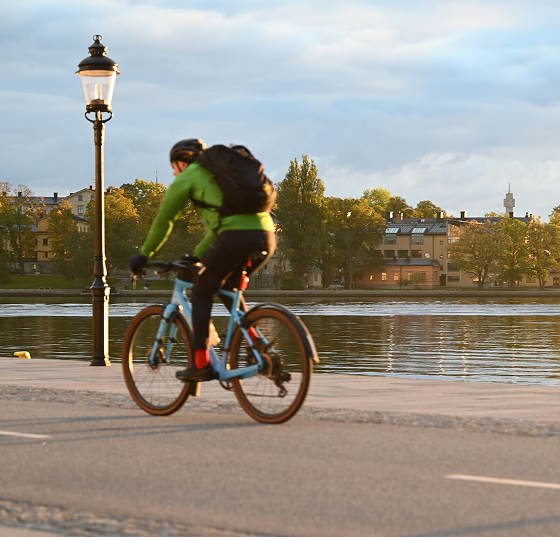
Cycling is one of the most sustainable transport modes. The more people opt to cycle, the more the city's spaces can be used for walking, greenery, meeting places and recreational areas. This makes the city more vibrant and sustainable.
Cycling in Stockholm
How a city is built impacts how we travel. In the 1930s, almost every third journey in Stockholm was made on a bicycle. As car traffic increased, the city gradually adapted to cars and new traffic solutions were built. This caused cycling to decline dramatically. By 1970, almost all cycle traffic had vanished from the city's streets. In the mid-1970s, investments in car traffic began to decrease, and today our aim is to ensure that cycling is the obvious choice for urban mobility. We are building new, wider cycleways and more bicycle parking facilities. Cycling currently accounts for one in ten journeys in the city.


Cycleways are not only for bicycles
In order for more people to be able and willing to use sustainable transport modes, the sustainable options must be simple, flexible and convenient. Micromobility suits people making shorter journeys or who choose a transport mode spontaneously. For example, you can book an e-scooter or a hire bike to get where you need to go. Technological advancements also mean that we are seeing new vehicle types on the cycleways. Cargo bikes, e-scooters, e-bikes and mopeds are all sharing the same space.
More cycling poses new challenges
The more we build and adapt the city for cycling, the busier the cycleways become. The increase in traffic and new vehicles brings challenges such as congestion during peak periods and differing speeds. This puts pressure on both the cycleways and the riders, who need to be aware of the traffic regulations and as well each other.
Facts
- Just over one in ten journeys in Stockholm and one in three work-related journeys in central Stockholm take place on a bicycle.
- More than half of all Stockholm residents can commute to work by bicycle in less than thirty minutes, and a third in less than fifteen minutes.
- Within 15 kilometres of central Stockholm, cycling is almost always faster than driving during peak periods.
Bicycle Network Team
Stockholm has its own team of cyclists that patrols the bicycle network cutting branches, repairing minor damage to streets and reporting issues that they discover on cycleways. The Bicycle Network Team has proved to be an effective way for the City to detect problems and resolve minor issues quickly.
Sweep-salting
Seasonal weather should not be an obstacle to cycling. The City sweep-salts several hundred miles of cycleway in the winter to ensure that cyclists do not slip over. This involves a road sweeping vehicle sweeping away snow and ice and then applying a salt solution to prevent re-freezing.